
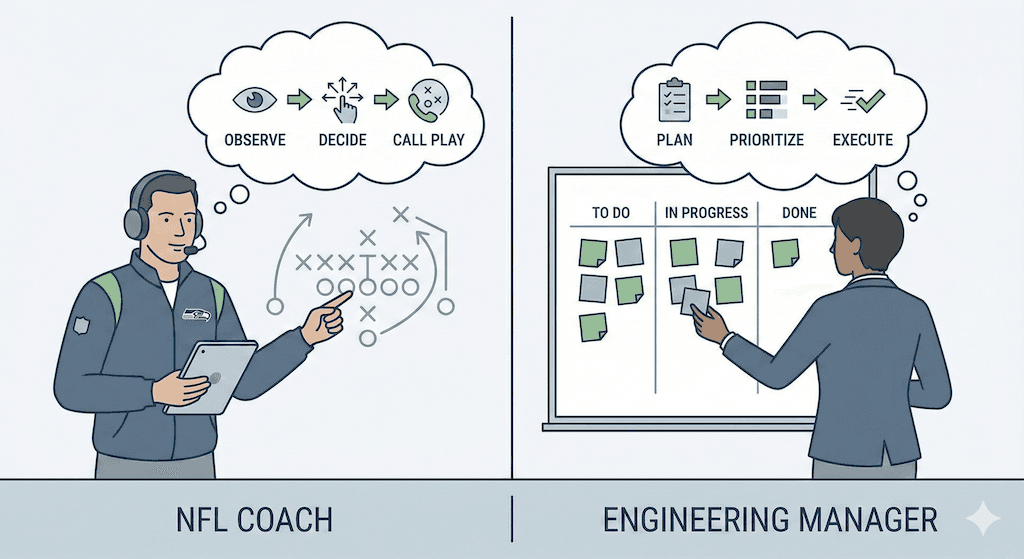
A typical NFL Play book contains up to a thousand plays and can be 500-800 pages long. Imagine a book thicker than the yellow pages with pages and pages of this:
Complexity is one of the reasons many successful NCAA quarterbacks wash out in the NFL. In Division 1 play, athleticism can win you championships, but in the NFL, athleticism is table stakes. The people who succeed in pro football are basically Rainman in pads and a helmet.
How do NFL players manage this cognitive load? The answer lies in the distinction between extrinsic and intrinsic cognitive load.
Intrinsic cognitive load refers to the inherent complexity of the material or task itself. This type of cognitive load is considered fixed. Changing the environment or instructional materials will not lower this load.
Extrinsic cognitive load includes all the unnecessary or irrelevant information that can distract the learner. Unlike intrinsic cognitive load, extrinsic cognitive load can be reduced by changing the environment.
From September to January, the majority of an NFL playbook is irrelevant. In season, teams have to focus on a different matchup every week or so. The matchup determines intrinsic complexity which is then boiled down to a game plan. After eliminating extrinsic load (information irrelevant to that week’s matchup), a typical NFL game plan condenses to 40-50 plays organized by down and distance.
But even that is too much load. A game plan could be up to 100 pages. You can’t bring a 100 page binder onto the field with you. In any event, getting clobbered by large men who can bench 225 for reps and run 40 meters in 4ish seconds is very stressful. Stress is a neural inhibitor. Once the whistle blows, the players’ effective IQ probably drops 15 points or more.
That explains why, on the field, players download information via the play call, which is a marvel of information architecture and taxonomical design.
A typical NFL play is called in this order: play type, offensive line protection, scheme, and cadence. Each coach may have their own schema, but most NFL play calls will have these 4 details in the play.
The main thing to note is that a play call has no extrinsic cognitive load. an entire team can hear a play call like this: South Right Clamp Fake 67 Slant Naked Right Zebra Slide Can 67 Slant and know exactly where to be and what to do in the moment.
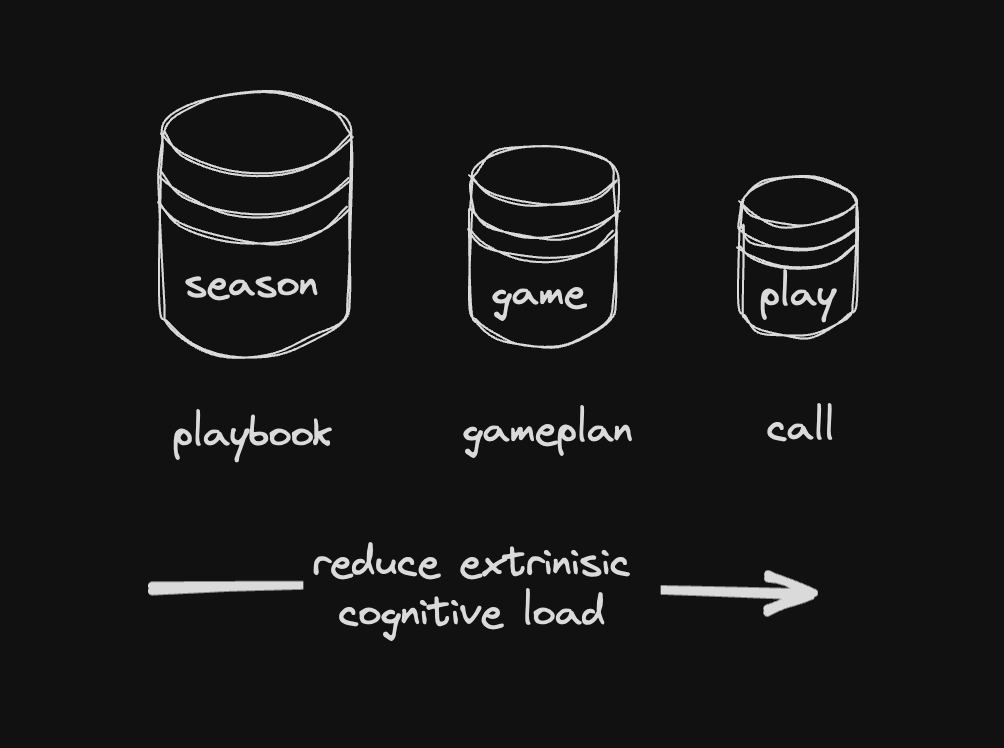
Stripped to its essence, the coach’s job is to reduce cognitive load, and ensure that the right people are having the right conversation at the right time. During preseason, it’s appropriate for the coaching staff to noodle over the playbook. During game week the offensive and defensive coordinators should be going over the game plan with the team. Once the whistle blows, the time for noodling is over. The team must focus on the call, which expresses the irreducible, and intrinsic cognitive load of each play.
The job of an engineering manager or lead isn’t really that different than the job of an NFL coach. Your job is to win, and the primary obstacle standing between your team and winning is cognitive load. If you are bad at managing cognitive load, you may meet objectives, but only through personal heroics. Over time and inevitably, your team is going to burn out and attrit, unless you can figure out how to reduce cognitive load and ensure that the right people are having the right conversation at the right time.
What that looks like will vary depending on context. The “right conversation” for an XP team will not match the “right conversation” for a Unified Process team. But in broad terms, during ideation, it’s appropriate for architects and managers to noodle over system architecture. During design, senior engineers should be going over contracts and component design. Once the sprint starts, it’s game time, which means no more noodling. The team must focus on the smallest unit of work, be it a lambda, class, or whatever.
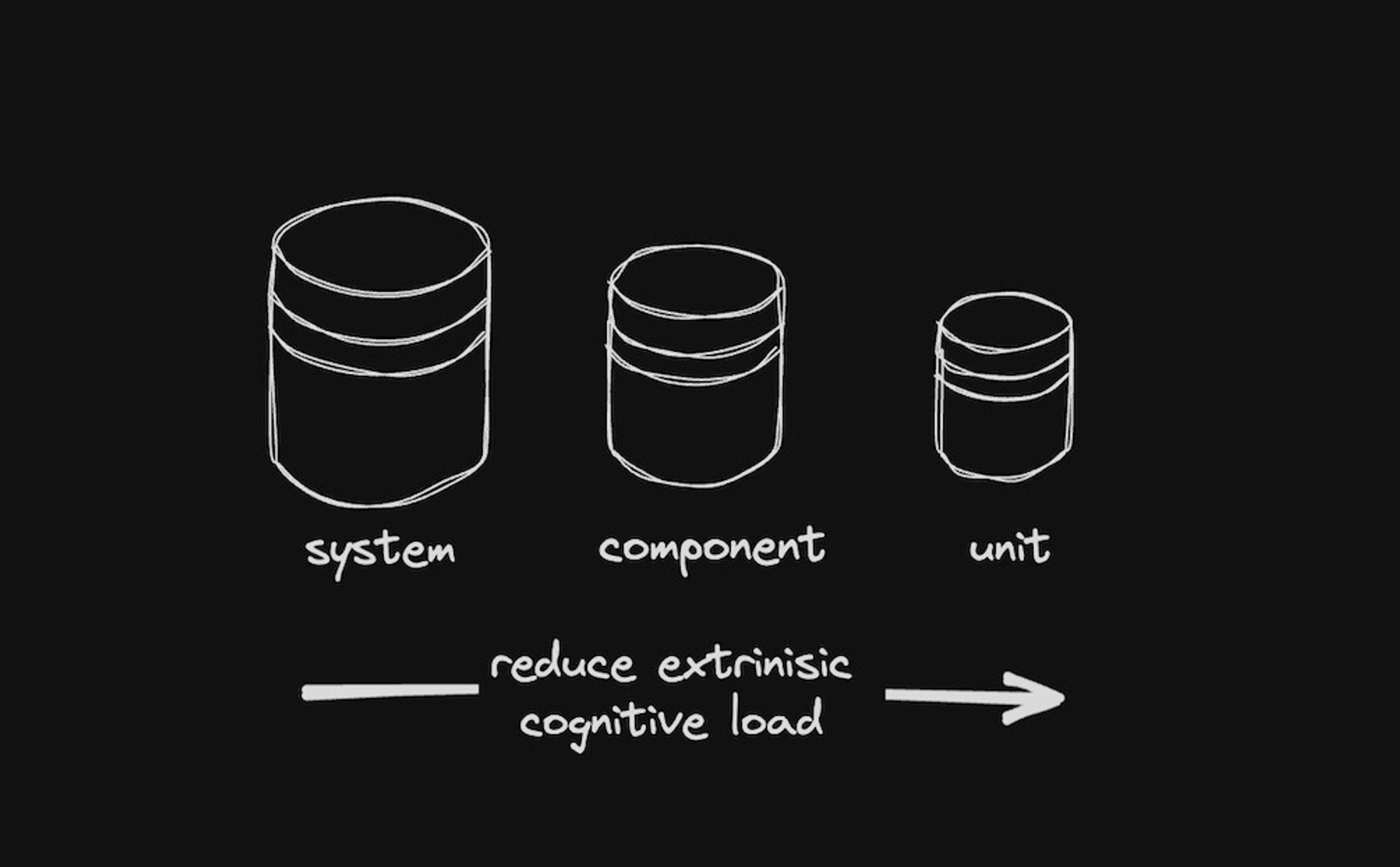
If your engineers are debating architecture in pull request commentary or during standup, something has gone very, very wrong. The wrong people are having the wrong conversation at the right time. You have lost control of cognitive load, which means you have lost control of the game.